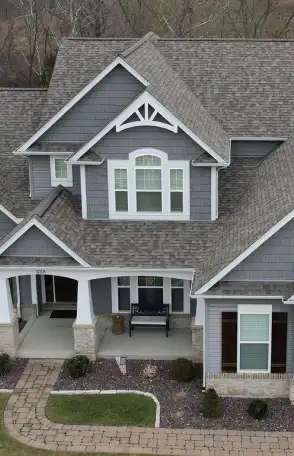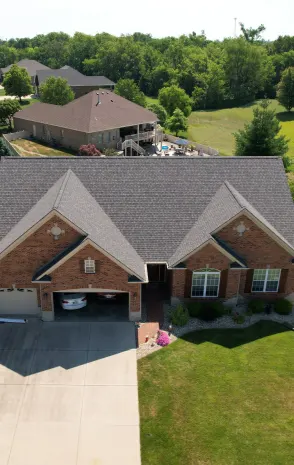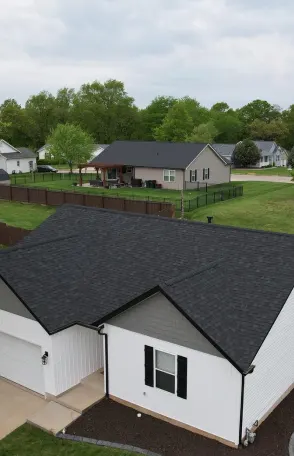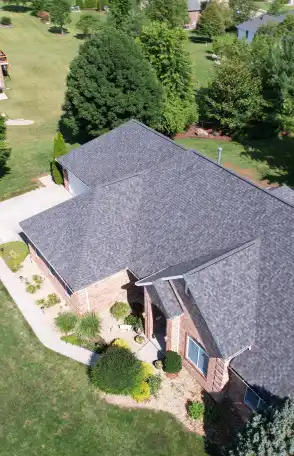



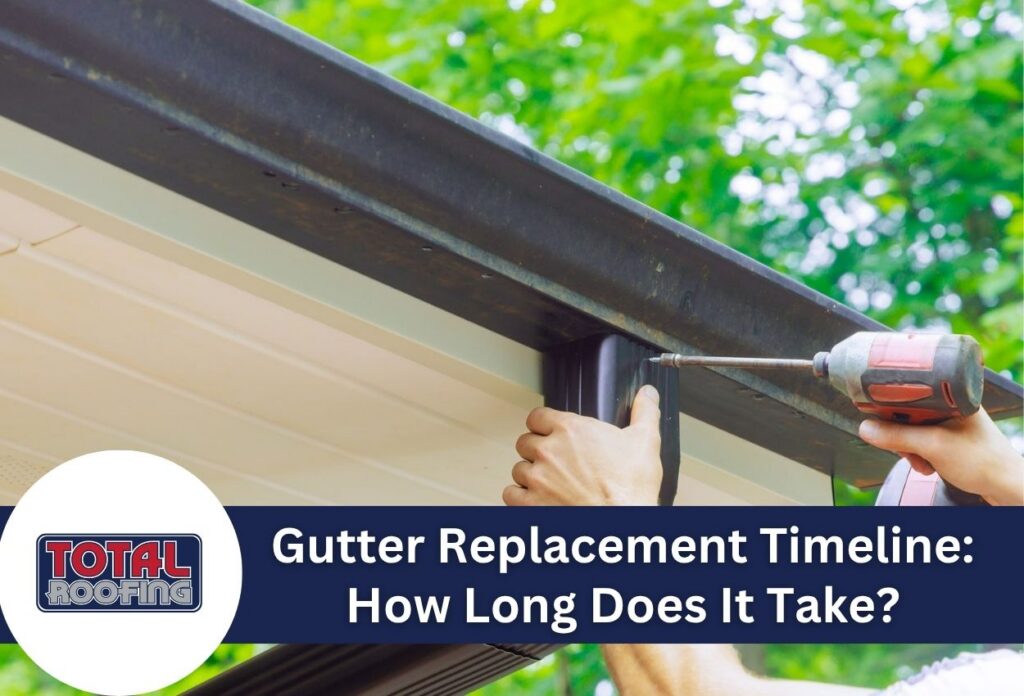

Most single-story and two-story St. Louis homes can have gutters fully replaced in 1 day, while large or complex properties can run 1 to 2 days. The gutter replacement timeline depends on the size of your home, the style of your roofline, and how much preparation the old system needs before new gutters go up.
Many older properties in St. Louis feature intricate trim, built-in gutters, and varied rooflines that add 4 to 8 hours of labor compared to newer buildings and can push a job into a second day. That extra time matters when scheduling your project around seasonal weather conditions.
How Long Does a Gutter Replacement Take from Start to Finish?
Most gutter replacements move through four phases and take 4 to 16 hours total, depending on the size of the home. Each phase has its own time range, and knowing what happens at each one helps homeowners plan their day around the crew. Seamless aluminum gutters are fabricated on-site using a roll-forming machine, so standard aluminum jobs typically need no special orders; St. Louis contractors can measure, fabricate, and install without a separate fabrication trip.
The estimated times below cover homes of all sizes. The low end reflects small, simple homes, and the high end reflects large or complex homes. Each phase extends with linear footage and roofline complexity.
| Phase | What Happens | Estimated Time |
|---|---|---|
| 1. Arrival and Measurement | Crew arrives, measures linear footage, marks downspout locations, and stages materials | 30 to 60 minutes |
| 2. Removal and Fascia Board Inspection | Old gutters and hangers are pulled down, debris is cleared from the roofline, and fascia boards are inspected | 1 to 4 hours |
| 3. Fabrication and Installation | New gutters are formed on-site, hung, and pitched for proper drainage | 2 to 10 hours |
| 4. Downspout Attachment and Final Inspection | Downspouts are connected, seals are checked, and water flow is tested | 30 to 60 minutes |
Total project hours vary by home size. Use this as a scheduling guide:
| Home Size | Square Footage | Total Estimated Hours |
|---|---|---|
| Small | Under 1,500 sq. ft. | 4 to 6 hours |
| Medium | 1,500 to 2,500 sq. ft. | 6 to 10 hours |
| Large | Over 2,500 sq. ft. | 10 to 16 hours |
Small and medium homes usually wrap in a single day; large homes often need a second. If fascia boards need to be repaired before the installation, add 1 to 4 hours per affected section to any of the ranges above.
What Factors Affect How Many Days It Takes to Replace Gutters on a House?
Five main variables determine whether a gutter replacement finishes in half a day or stretches into a second day, and each one has a measurable impact on timing:
- Linear footage: Every 100 linear feet of gutter adds roughly 1 to 2 hours to the installation. Gutters on larger homes simply take longer to measure, fabricate, and hang.
- Number of stories: A two-story home adds 1 to 2 hours just for safety setup; ladders, scaffolding, and additional crew positioning all take time before a single gutter goes up.
- Gutter material: Copper installation takes longer than aluminum because it requires specialized soldering and more careful handling at every joint and corner.
- Roofline complexity: Each additional corner, hip, or valley adds 15 to 30 minutes. It takes much less time to replace gutters on a simple rectangular roofline than a multi-gabled home with multiple angles.
- Fascia board repair needs: Replacing rotted fascia boards adds 1 to 4 hours per affected section, and gutters cannot go up until the fascia board underneath is solid. A residential roof inspection before your gutter project can catch hidden fascia board damage early and prevent schedule overruns.
Older St. Louis homes often need fascia board assessments and custom fitting that can add a half day to a full day compared to newer buildings. If a property sits in a local historic district, gutter and downspout work requires a permit. In the City of St. Louis, the Cultural Resources Office reviews these applications. Compliant applications are usually approved within a few days, but revisions or Preservation Board reviews can add weeks, and St. Louis County municipalities have their own review rules.
When Is the Best Time of Year to Schedule Gutter Replacement in St. Louis?
Early fall is the best window to schedule a gutter replacement in St. Louis. September through October offer dry conditions, moderate temperatures, and lead times of just 1 to 2 weeks. Each season has different trade-offs, and knowing them helps homeowners choose the right time to book.
Spring runs from March through May and brings the highest rainfall of the year. St. Louis averages 40 to 50 thunderstorm days a year, and frequent spring storms make scheduling unpredictable. Rain delays push jobs back, and the post-storm damage rush stretches contractor availability thin. Requesting an estimate at least 6 weeks before you want the work done is advised during this period, since wait times can reach 3 to 6 weeks.
Summer brings the most thunderstorms of the year, with June typically the peak, so rain delays remain common and contractor demand stays high. Jobs still get done, but lead times grow.
Winter is the most restricted season. St. Louis averages about 18 inches of snow annually, with January lows around 26 degrees Fahrenheit. Gutter sealants can be applied in freezing weather, so the real limits are ice and snow on ladders and roof edges, and most contractors avoid exterior installations on icy or snow-covered days.
Early fall gives homeowners the best combination of favorable weather, shorter wait times, and pre-freeze timing. Gutters installed in fall are in place before temperature changes stress the system through winter. November carries risk, since temperatures can drop below 32 degrees Fahrenheit and quickly limit the remaining time for outdoor work.
What Should You Expect During a Gutter Replacement and What Can Delay It?
A standard gutter replacement on a small single-story home (under 1,500 square feet, with roughly 150 linear feet of gutter or less) follows the same four phases described above and can be completed in a single day when no surprises surface. Here are the specific tasks within those phases and how long each one takes:
- Crew arrival, measurement, and material staging: The team arrives, measures linear footage, marks downspout locations, and stages materials along the roofline. This takes roughly 30 minutes before any work begins.
- Old gutter teardown and debris removal: Existing gutters and hangers come down, and debris is cleared from the roofline. Expect this to take 1 to 1.5 hours for a home this size.
- Fascia board inspection: Before anything is installed, the crew checks the fascia boards for rot or damage. This inspection typically takes 15 to 30 minutes.
- Seamless gutter fabrication on-site: New gutters are created using a roll-forming machine right on your property. Each run takes 30 to 60 minutes to fabricate, with fabrication overlapping with installation rather than adding to the total.
- Installation and sealing: Gutters are hung, pitched for drainage, and all joints are sealed. This task runs 2 to 3 hours depending on the complexity of the roofline.
- Final downspout check and water flow test: Downspouts are attached, and water flow is tested at every outlet. Plan for this to take about 30 minutes at the end of the job.
Together, these tasks add up to roughly 4 to 6 hours for a small home like this, in line with the small-home estimate in the table above.
Five conditions can push that timeline longer:
- Unexpected fascia board rot: Replacing damaged fascia boards adds 1 to 4 hours per affected section, and gutters cannot be installed until the fascia board is solid.
- Rain or storms during installation: Heavy rain, lightning, or high winds stop work for safety, and light rain can slow it. A rescheduled installation typically means a delay of 1 to 3 days in slower seasons, and longer during the spring storm rush, when the next open slot may be weeks away.
- Crew access on steep or hard-to-reach roof sections: Extra safety setup and repositioning can add 1 to 2 hours before the crew can work those sections.
- Material delivery mismatch for specialty gutters: Copper, specialty profiles, or custom coil colors not carried on the truck can push the installation back 1 to 2 days while materials are sourced.
- Permit holds in historic districts: Gutter and downspout work in a local historic district requires a permit. Approval is often quick for compliant plans, but revisions or Preservation Board reviews can delay the project by weeks.
If a contractor cannot commit to a one-day timeline for a small single-story home, ask for a written explanation of what is driving the longer timeline. Their answer will tell you a lot about how well-prepared the crew is before showing up.
Is a Gutter Replacement Worth the Cost and How Does It Compare to Repeated Repairs?
Homeowners who repair sectional gutters three or more times in 5 years are on pace to spend as much as a full replacement within about a decade, making replacement the lower long-term cost once repairs become frequent. The table below shows why, using a cost-per-year comparison across four common options:
| Option | Upfront Cost | Lifespan | Cost Per Year |
|---|---|---|---|
| Sectional gutter repair | $150 to $400 per visit | 1 to 3 years | $50 to $400 per year |
| Partial gutter replacement (one side) | $500 to $1,200 | 20 to 30 years (aluminum) | $17 to $60 per year |
| Full seamless aluminum replacement | $1,000 to $2,500 | 20 to 30 years | $33 to $125 per year |
| Full copper gutter replacement | $4,000 to $8,000 | 50+ years | $80 to $160 per year |
The repair row assumes each repair lasts 1 to 3 years, or roughly one visit per year at most. A partial replacement costs less per year because it covers less of the home.
Sectional repairs look cheap upfront, but repeat visits add up: three repairs in 5 years can total $450 to $1,200, and a decade of repairs approaches the cost of a replacement that delivers 20 to 30 years of service. A full seamless aluminum replacement at $1,000 to $2,500 for a typical single-story home often costs less per year than repeated patch jobs.
Functioning gutters also protect fascia boards, soffits, and foundations from water damage. Fascia board replacement typically costs $5 to $20 per linear foot, so a full-perimeter job often lands around $1,000 to $3,000, meaning neglected gutters can trigger a repair bill that rivals a full gutter replacement.
Ready to Schedule Your Gutter Replacement in St. Louis?
A full seamless aluminum replacement lasts 20 to 30 years and protects your fascia boards, soffits, and foundation from water damage. Total Roofing helps homeowners across the St. Louis area replace their gutters, whether the home is a newer build or an older property that needs custom fitting or fascia board repair.
If your gutters are sagging, leaking, or costing you in repeated repairs, contact Total Roofing to request a gutter replacement estimate and find out what your home needs.
Not ready to schedule? Learn more about gutter replacements.