



When severe storms strike the St. Louis area, roof damage is often an unfortunate consequence. Emergency roof tarping is one way to protect your home and belongings from further damage until permanent repairs are completed. But as homeowners face the stress of a damaged roof, one question often comes to mind: Can insurance cover roof tarping?
The good news is that most homeowners insurance policies do consider roof tarping as a necessary preventive measure following storm damage. Insurance companies generally recognize that temporary protection helps minimize additional damage to the home’s interior, potentially saving thousands in secondary damage claims.
For St. Louis homeowners dealing with roof emergencies, understanding your insurance coverage options for temporary roof repairs is essential before severe weather strikes. Storm damage roof tarping insurance typically falls under the emergency services or mitigation portion of your policy. This coverage exists because insurers would rather pay for a tarp installation than face more extensive claims for water damage to ceilings, walls, flooring, and personal belongings.
However, coverage details can vary between policies and providers. Some insurance companies may require approval before arranging emergency tarping, while others allow homeowners to take immediate action and seek reimbursement for roof tarping services afterward. Knowing these distinctions can make a substantial difference when protecting your home during a roofing crisis.
How Homeowners Insurance Policies Address Temporary Roof Protection
Understanding the specific language in your homeowners insurance policy regarding emergency roof tarping can save you significant stress following storm damage. Most policies include provisions for emergency mitigation services or temporary repairs, which is where roof tarping typically falls. When reviewing your policy, look for terms like reasonable repairs, emergency services, or mitigation of further damage in the coverage section.
It’s important to distinguish between two aspects of coverage: the tarping service itself and the underlying roof damage. The roof tarp coverage typically falls under the additional living expenses or loss mitigation portion of your policy. This covers the temporary protective measures taken to prevent further damage. Meanwhile, the actual roof damage repair would be covered under your dwelling coverage, which is subject to your deductible and policy limits.
St. Louis homeowners should note that many insurance companies view emergency roof tarping as a cost-effective necessity. Insurance reimbursement for roof tarping services is generally straightforward when properly documented. However, timing matters, and most policies require homeowners to take reasonable steps to protect their property from further damage after the initial incident. This means arranging for professional roof tarping as soon as safely possible following storm damage, rather than waiting for an adjuster to inspect the property first.
Steps to Follow when Filing an Insurance Claim for Roof Tarping After Storm Damage
When your St. Louis home suffers roof damage during a storm, documenting the damage and filing an insurance claim immediately are the first steps in getting coverage for emergency roof tarping. Begin by taking clear, dated photos of all visible damage from safe vantage points, both from the ground and, if possible, from inside your attic where leaks may be visible. These photos serve as evidence for your insurance claim.
Next, contact a reputable roofing contractor for a professional assessment. Their detailed documentation provides the technical evaluation insurance companies require. Choose licensed roofing professionals who can provide accurate damage reports and properly install emergency roof tarps to prevent secondary damage.
Timing is absolutely critical when dealing with storm damage roof tarping insurance claims. Most policies include language requiring homeowners to take reasonable steps to prevent further damage, and waiting too long to arrange temporary roof protection could result in claim denials for additional damage. Submit your claim as soon as possible, including all documentation of the initial damage and the emergency tarping service.
When submitting a homeowners insurance claim, include itemized invoices from your roofing contractor that clearly separate the emergency tarping service from any permanent repair estimates. This helps insurance adjusters process your claim efficiently, potentially speeding up reimbursement for roof tarping services while the permanent repair portion undergoes full evaluation.
When Insurance Companies Are Most Likely to Cover Tarping Services
Insurance companies typically approve coverage for emergency roof tarping in specific scenarios where the damage is sudden and accidental. Storm damage is the most common qualifying event, particularly when caused by high winds, hail, or tornadoes that occasionally affect the St. Louis region. When severe weather tears off shingles, creates holes in your roof, or causes tree limbs to fall onto your home, insurance providers generally recognize the immediate need for protective tarping.
Another circumstance where blue tarp roof coverage is typically approved is when the damage is clearly documented as resulting from a covered peril. For instance, if lightning strikes your roof or heavy snow causes structural damage, these situations usually qualify for emergency tarping coverage. Insurance companies understand that temporary protection prevents water infiltration that could lead to mold, electrical hazards, and structural deterioration.
However, not all scenarios qualify for insurance reimbursement for roof tarping services. Claims are commonly denied when the damage results from normal wear and tear, lack of maintenance, or pre-existing roof conditions. Age-related deterioration or neglected repairs typically fall outside coverage parameters. Additionally, some policies exclude certain types of storm damage or have specific limitations regarding emergency services.
St. Louis homeowners should be aware that the timing of your request matters significantly. Most insurance companies expect immediate action following damage, and they’re more likely to cover tarping services that are promptly arranged through reputable, licensed roofing contractors.
Why It’s Important to Work With Professional Roofers for Tarping and Storm Damage
Partnering with experienced St. Louis roofing contractors is necessary to restore your home after roof storm damage. Professional roofers know exactly what signs of damage to look for, how to document it, and can give homeowners estimates for repairs that can be included in claims.
When selecting a roofing contractor, look for companies with specific experience in storm damage and tarping. These professionals can provide detailed documentation, including comprehensive damage reports, precise measurements, clear photographs, and itemized cost breakdowns that insurance adjusters require to process your claim.
Professional roofers can also help identify all damage that might not be immediately visible to untrained eyes. This thorough assessment ensures your claim includes all necessary repairs, not just the obvious damage. Many St. Louis roofing companies offer free inspections and can point out damage that might otherwise be overlooked.
By working with professionals who understand storm damage and roof tarping, you’ll maximize your chances of a smooth process and quality repairs once your claim is approved.
Tips to Maximize Your Insurance Reimbursement for Roof Tarping
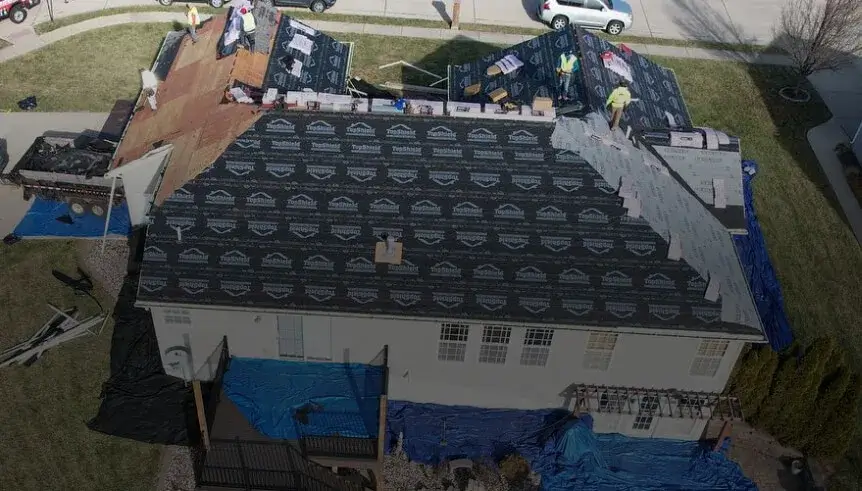
The key to maximizing your reimbursement for roof tarping begins with keeping records of the entire process. From the moment you discover roof damage, document everything with dated photographs showing the extent of the damage before tarping. Take additional photos once the tarp is installed to demonstrate the necessity of this preventive measure.
Keep a detailed log of all interactions with your insurance company, including names of representatives, dates, times, and summaries of conversations. Save all emails and written correspondence in a dedicated folder. When working with a St. Louis roofing contractor, request itemized invoices that clearly separate the emergency tarping services from any estimates for permanent repairs.
If your claim for emergency roof tarp insurance coverage is denied, don’t give up immediately. Review your policy language carefully to identify specific provisions related to mitigation services. Prepare a written appeal that references these policy provisions and emphasizes how the tarping prevented further damage to your property.
Sometimes, persistent negotiation with insurance adjusters can reverse an initial denial. Remember that insurance companies prefer paying for temporary roof repairs rather than extensive water damage to your home’s interior. By clearly demonstrating how roof tarping protected their financial interests, you strengthen your case for reimbursement.
After Tarping: Understanding Long-Term Roof Repair Coverage
The transition from emergency tarping to permanent roof repairs is a critical phase in your home’s recovery process. While insurance typically covers emergency tarping as a mitigation measure, the coverage for permanent repairs follows different guidelines and timelines. Most insurance policies separate these two phases distinctly in their coverage terms, with different deductibles and approval processes potentially applying to each.
Once your roof has been temporarily protected with tarping, your insurance company will likely require a thorough assessment of the total damage before authorizing permanent repairs. This evaluation determines whether your roof qualifies for partial repairs or complete replacement. Insurance companies generally approve the most cost-effective solution that restores your roof to its pre-damage condition.
Coordinating between your insurance company and roofing contractor during this transition is essential. Experienced St. Louis roofers can provide detailed documentation that supports your need for comprehensive repairs beyond temporary tarping. They can also help identify any hidden damage that may have been missed during the initial emergency assessment.
The timeline between temporary tarping and permanent repairs varies significantly based on claim processing times, contractor availability, and material procurement. Your insurance policy may specify maximum timeframes for completing permanent repairs after emergency tarping, so reviewing these details can help you plan accordingly and maintain continuous coverage protection.
Secure Your Home with Total Roofing’s Expert Roof Tarping Services
If you’ve recently experienced storm damage and are worried about further harm to your property, it’s crucial to act quickly. Roof tarping is not only a preventive measure but often a necessary step to ensure your home remains safe while you sort out permanent repairs. Understanding your insurance coverage for emergency roof tarping can be complex, but it’s essential for protecting your investment and minimizing out-of-pocket expenses.
Total Roofing specializes in providing quick and efficient roof tarping and storm damage repair services. Don’t wait for the situation to worsen. For immediate assistance, call Total Roofing at (618) 719-6767 and ensure your home is safe and secure with professional roof tarping services.