



What Are Siding Services in MO and Why Do St. Louis Homeowners Need Them?
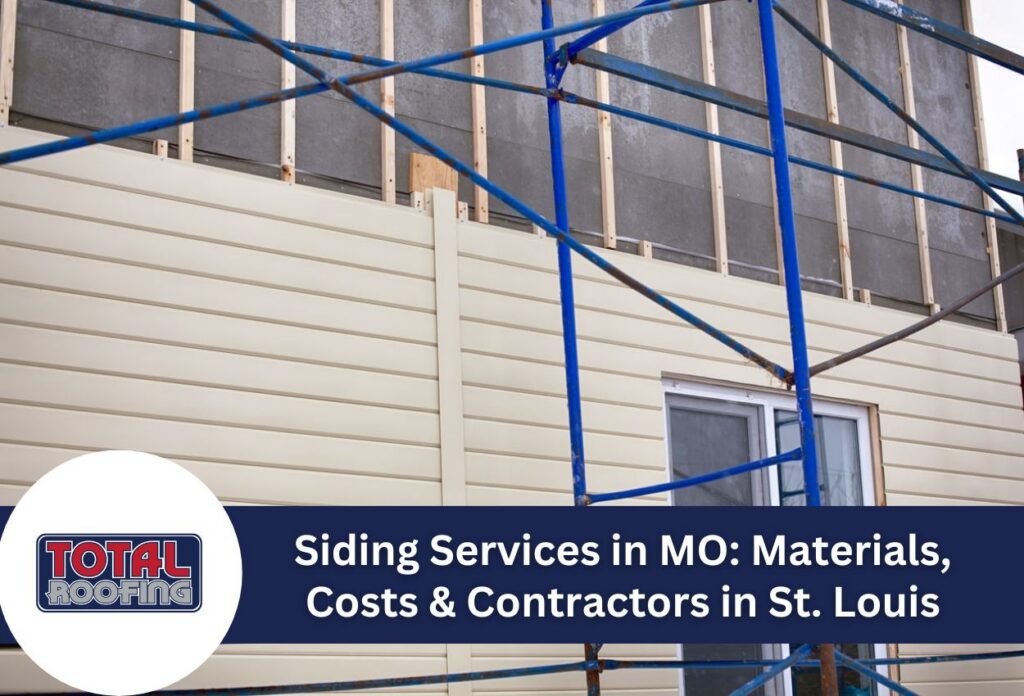

Siding services include installation, replacement, and repair of the exterior panels that protect a home’s walls, and in St. Louis, MO, those services are a functional necessity, not just a cosmetic upgrade. The city’s climate hits siding hard from every angle. Humidity levels average 60% to 70% year-round, peaking above 70% in summer. Temperature swings from winter lows near 20 degrees Fahrenheit to summer highs around 90 degrees cause siding materials to expand and contract repeatedly from November through March. Add wind-driven rain, hail, and moisture from the nearby Mississippi River, and siding takes a serious beating season after season.
The age of St. Louis’s housing stock makes the problem even more pressing. Most homes in the area were built between 1950 and 1980. That means a large share of local properties are approaching or already past their siding’s expected lifespan of 20 to 50 years. Older siding exposed to decades of midwestern humidity and temperature changes is more likely to crack, warp, or allow moisture inside the walls.
This article covers siding materials, costs, contractors, seasonal timing, and how to hire the right professional, everything a St. Louis homeowner needs to make a smart decision.
What Types of Siding Services in MO Do Contractors Typically Offer?
Missouri siding contractors typically offer three core service types: new siding installation, siding replacement, and siding repair, and each one fits a different situation. Most affordable siding installation companies in Missouri provide all three tiers, but the project’s scale, material choice, and home complexity drive costs in very different directions. Knowing which service category fits your home’s condition is the fastest way to get an accurate quote and avoid paying for work you don’t need.
| Service Type | Best Used When | Average Project Scale |
|---|---|---|
| New siding installation | No existing siding is present, or the home has bare sheathing after a full tear-off | Full exterior coverage: includes underlayment, trim, and finish work |
| Siding replacement (full or partial) | Existing siding is past its 20 to 50-year lifespan, warped, or moisture-damaged across large sections | Removal of old material plus installation of new panels on part or all of the home |
| Siding repair | Damage is limited to a few panels, seams, or impact points from hail or wind-driven rain. | Spot replacement, caulking, or re-securing loose sections without full removal |
St. Louis homes with brick veneer or original aluminum siding add a layer of complexity. Removing or preparing those surfaces before new siding goes on takes extra labor and specialized tools, which affects both which contractor is right for the job and what the total cost will be. Get a written job scale before any project starts.
Which Siding Materials Are Best for Missouri’s Climate?
Vinyl siding is the most common choice in St. Louis because it resists humidity, requires little maintenance, and costs less per square foot than most alternatives. Missouri’s climate puts every siding material through real stress. Humidity runs 60% to 70% year-round, summer temperatures reach around 90 degrees, hail strikes regularly, and repeated temperature changes from November through March cause materials to expand and contract. Not every siding type handles those conditions equally well.
| Material | Climate Performance in MO | Average Lifespan | Maintenance Level | Cost Range per Square Foot |
|---|---|---|---|---|
| Vinyl | Strong humidity resistance: Handles temperature changes well. Can crack in extreme cold | 20 to 40 years | Low occasional cleaning | $1 to $3 |
| Fiber cement | Excellent dimensional stability in heat and cold: fire resistant, resists moisture absorption | 25 to 50 years | Moderate repaint every 10 to 15 years | $2 to $5 |
| Aluminum | Dent-prone under hail impact: holds up in humidity, common on older St. Louis homes | 20 to 40 years | Low to moderate prone to fading | $1 to $3 |
| Wood | High moisture absorption: requires consistent upkeep in humid St. Louis conditions | 20 to 40 years | High annual sealing and painting | $2 to $5 |
Vinyl remains the go-to for most St. Louis homeowners because the combination of low costs and low maintenance is hard to beat in this climate. Fiber-cement siding is gaining ground fast, especially on homes where fire resistance and stability through wide temperature swings matter more than upfront savings. Fiber cement’s 25 to 50 year lifespan gives it the longest run of any material in this comparison, making it a strong value over time despite higher upfront costs. One important note: older St. Louis neighborhoods with historic guidelines may restrict which materials are allowed or require municipal approval before installation begins, a detail covered in the next section.
How Much Do Siding Services in MO Cost?
Siding installation labor in St. Louis runs $30 to $60 per hour or $1 to $3 per square foot, and when combined with material costs, total project costs range from roughly $1,000 to $8,000+ per 1,000 square feet, depending on what material you choose.
| Material Type | Material Cost per Sq Ft | Labor Cost per Sq Ft | Estimated Total per 1,000 Sq Ft | Project Tier |
|---|---|---|---|---|
| Vinyl | $1 to $3 | $1 to $3 | $2,000 to $6,000 | Budget |
| Aluminum | $1 to $3 | $1 to $3 | $2,000 to $6,000 | Budget to Mid-Range |
| Fiber Cement | $2 to $5 | $1 to $3 | $3,000 to $8,000 | Mid-Range to Premium |
| Wood | $2 to $5 | $1 to $3 | $3,000 to $8,000 | Premium |
These ranges are starting points. Several factors specific to St. Louis push final costs higher. Multi-story homes and tight lot spacing, common in older St. Louis neighborhoods, require more setup time and equipment, adding to labor hours. Removing original brick veneer or aluminum siding before new panels go on takes extra work beyond basic tear-off. Any project over 300 square feet requires a building permit from the local municipality. Permit fees vary but add to the total. Disposal of old materials is another line item many homeowners overlook when budgeting.
Missouri contractors must hold a residential contractor license if the project value exceeds $10,000, so ask for proof of licensing before signing anything. Getting at least three written quotes is the best way to confirm you are paying a fair rate for your specific project’s scale. Costs can swing based on home size, siding removal needs, and the material selected. Some affordable siding installation companies in Missouri offer financing options or seasonal promotions, particularly in spring and fall, when demand for installation is high. Comparing quotes side by side also establishes a clear baseline for evaluating which contractor offers the best combination of cost and quality workmanship.
What Are the Signs You Need Siding Repair or Replacement in Missouri?
If damage covers more than 30% of your siding’s surface area, or your siding is 20+ years old with multiple visible problems, replacement is usually more cost-effective than ongoing repairs. Knowing which situation you are in saves time and money before you ever call a contractor.
- Warping or buckling panels: Summer temperatures near 90 degrees push siding materials past their expansion limits. Warped or buckled panels that do not lie flat are a sign that the material has lost structural integrity and will not recover on its own.
- Mold or mildew growth: Humidity in St. Louis averages 60% to 70% year-round and climbs above 70% in summer. Mold patches spreading across more than one panel section signal that moisture is getting behind the siding, not just sitting on the surface.
- Cracked or missing panels after storms: Hail and wind-driven rain hit the St. Louis region multiple times per year. Any cracked, chipped, or missing panel after a storm should be inspected within 48 hours to prevent water from reaching the wall sheathing underneath.
- Interior moisture stains or leaks: Water stains on interior walls near the exterior edge of a room point directly to siding failure. This symptom means the damage has already moved past the siding itself and into the structure.
- Fading or chalking from UV exposure: Heavy fading or a chalky white residue forming on siding surfaces shows the protective coating has broken down, leaving the base material exposed to Missouri’s weather with no barrier left.
- Rising heating or cooling bills: A noticeable increase in energy costs, especially in homes with original siding installed between 1950 and 1980, often means the siding is no longer providing any meaningful insulation value.
St. Louis homes over 50 years old with original aluminum or wood siding are especially likely to show several of these warning signs at the same time, making full replacement more cost-effective than repeated spot repairs. Post-storm damage should always be assessed by a licensed contractor. Many siding repairs tied to hail or windstorm qualify for homeowners’ insurance coverage, which can offset replacement costs.
How Do You Choose the Best Siding Contractors in Missouri?
Verify a Missouri residential contractor license before signing anything. State law requires it for any project exceeding $10,000, and hiring an unlicensed contractor puts you at risk for voided manufacturer warranties, failed municipal inspections, and personal liability if a worker is injured on your property.
- Verify Missouri residential contractor licensing: Any siding project valued over $10,000 requires the contractor to hold a valid residential contractor license in Missouri. Ask for the license number upfront and confirm it is active before discussions go further.
- Confirm local St. Louis experience: Contractors who have worked in St. Louis neighborhoods understand municipal permit requirements, including the building permit required for any project over 300 square feet. Local experience is not a bonus: it directly affects whether your project passes inspection.
- Check manufacturer certifications: Certified installers for vinyl or fiber-cement products are trained to meet the manufacturer’s installation standards. Without a certified installation, most product warranties, some covering 25 to 50 years for fiber cement, can be voided before your first winter.
- Review verified customer feedback and photo portfolios: Look for documented work on homes similar to yours. St. Louis’s older neighborhood stock includes tight lot spacing, brick-frame hybrid construction, and historic district guidelines. A contractor’s photo portfolio should show they have handled those conditions before.
- Confirm insurance coverage: Ask for certificates showing both general liability insurance and workers’ compensation coverage. If a contractor cannot produce both documents quickly, move on.
- Request itemized written estimates from at least three contractors: Labor in St. Louis runs $30 to $60 per hour or $1 to $3 per square foot. Side-by-side written estimates let you spot which costs are padded and which reflect the actual project’s scale, including tear-off, permitting, and disposal.
- Ask about warranty terms before signing: Get specifics on both the product warranty from the manufacturer and the workmanship warranty from the contractor. A strong workmanship warranty, typically 1 to 10 years, depending on the contractor, shows confidence in the quality of the installation.
Price alone is a poor filter in St. Louis. A contractor familiar with tight lot spacing, historic district restrictions, and brick-frame hybrid homes brings real practical value that a low bid from an out-of-area company simply cannot match. Run through this checklist on every contractor before any contract is signed.
What Permits and Regulations Apply to Siding Services in Missouri?
Two regulatory layers apply to siding projects in St. Louis: a municipal building permit is required for any siding work covering more than 300 square feet, and Missouri state law requires contractors to hold a residential contractor license on any project exceeding $10,000 in value. Both requirements apply regardless of the material used or how straightforward the job appears.
The permit process follows a standard sequence. A contractor submits project plans to the local municipality, pays a permit fee, and schedules a final inspection once the work is complete. Reputable siding contractors pull the required permits on the homeowner’s behalf as part of their standard service. If a contractor does not offer to handle permitting, that is a warning sign worth taking seriously. Permit fees vary by city and county jurisdiction across the St. Louis area, so costs will differ depending on which municipality oversees the property.
Historic Districts and Additional Restrictions
Certain neighborhoods in St. Louis fall within historic or preservation districts that add another layer of requirements beyond standard municipal permits. These districts can restrict which exterior materials are allowed, limit color choices, or require specific siding profiles that match the original construction period of the street. Homeowners in these areas should verify compliance with their local historic preservation office before selecting any material. Choosing the wrong product can mean a required removal and reinstallation at the homeowner’s expense.
Some contractors suggest skipping permits to save time or reduce upfront costs. That shortcut carries real consequences. Unpermitted siding work can complicate a home resale when title companies or buyers request permit histories, void manufacturer warranties that require code-compliant installation, and create personal liability if the unpermitted work is later connected to water damage or structural problems. The permit process exists to protect the homeowner, not to slow the project down.
When Is the Best Time of Year to Schedule Siding Services in MO?
Spring (April through June) and fall (September through October) are the best times to schedule siding installation in St. Louis. Temperatures during these windows stay moderate enough for adhesives and caulks to cure correctly, avoiding the warping risk that comes with summer heat near 90 degrees and the installation failures that follow when temperatures drop below freezing in winter. Booking in late winter, February or March, for a spring install is the smartest move, since contractor availability tightens as demand rises in April. Locking in your spot early can also improve your chances of better scheduling options and seasonal pricing.
| Season | St. Louis Temp Range | Avg Humidity | Installation Suitability | Reason |
|---|---|---|---|---|
| Spring (Apr to Jun) | 50 to 75 degrees | 60% to 65% | Ideal | Moderate temps allow proper curing: low storm risk early in season |
| Summer (Jul to Aug) | 70 to 90 degrees | Above 70% | Acceptable | Heat can warp panels during handling: high humidity slows caulk cure |
| Fall (Sep to Oct) | 50 to 70 degrees | 60% to 65% | Ideal | Stable temps and lower humidity support clean, consistent installation |
| Winter (Nov to Mar) | 20 to 40 degrees | 55% to 65% | Not Recommended | Freezing temperatures impair adhesives and increase material brittleness |
Emergency repairs after hail, wind, or storm damage may fall outside these ideal windows. Reputable contractors use materials and techniques suited for off-season conditions when necessary. Waiting is not always an option after serious storm damage. Homeowners dealing with urgent weather-related exterior damage can learn more about the available emergency roof storm damage services available for the St. Louis area.
How Long Does Siding Last in Missouri, and What Affects Its Lifespan?
Siding in St. Louis lasts 20 to 50 years, depending on the material, but Missouri’s humidity, UV exposure, and temperature changes regularly push siding systems toward the lower end of that range without consistent upkeep. The spread between a 20-year result and a 50-year result often comes down to material choice, installation quality, and how well the homeowner maintains the exterior over time. Poor installation alone, including improper flashing, missing moisture barriers, or incorrect fastening, can cut a siding system’s lifespan by 30% or more.
| Siding Material | Typical Lifespan in Missouri | Top Degradation Factors | Recommended Maintenance Frequency |
|---|---|---|---|
| Vinyl siding | 20 to 40 years | UV fading, hail cracking, and temperature changes | Annual inspection: clean every 1 to 2 years |
| Fiber-cement siding | 30 to 50 years | Leaks, if unpainted, humidity swelling | Repaint every 8 to 10 years: inspect caulk annually |
| Wood siding | 20 to 40 years | Humidity, mold, UV damage, temperature changes | Paint or seal every 3 to 5 years: inspect annually |
| Aluminum siding | 30 to 40 years | Denting from hail, oxidation, and UV chalking | Clean and inspect every 2 years |
| Engineered wood siding | 25 to 30 years | Moisture absorption at seams, mold in high humidity | Inspect seams and caulk annually |
Hiring an experienced siding contractor matters more than most homeowners realize. Shortcuts taken during installation, even on high-quality materials, create gaps that allow moisture to reach the wall sheathing, which accelerates rot and shortens the system’s service life by years. Insulated siding, increasingly offered as part of fiber-cement siding services across Missouri, adds a layer of energy efficiency alongside structural support, a topic worth reviewing in detail when budgeting for a full replacement.
Does New Siding Add Value to a St. Louis Home?
New siding consistently ranks among the top home improvement projects for resale return, with vinyl siding replacement typically recouping around 80% of project costs and fiber-cement siding replacement recouping close to 90% at resale, based on industry cost-versus-value benchmarks. For St. Louis homeowners, where most homes were built between 1950 and 1980, and many carry original or aging siding, updated curb appeal carries real weight with buyers comparing properties in the same neighborhood.
The return does not stop at resale. Insulated siding options reduce heat loss through exterior walls, which lowers energy bills over time. Some homeowners’ insurance carriers also reduce premiums when fire-resistant materials like fiber cement replace older wood or aluminum siding worth asking your insurer about directly. Beyond the resale number, replacing deteriorating siding stops moisture damage before it spreads into wall sheathing, where repair costs can climb far past the cost of the siding replacement itself.
How Neighborhood Character Affects the Value Calculation
Material grade alone does not drive appraised value in every St. Louis neighborhood. In established historic areas, matching the existing architectural character of the street matters as much as choosing a durable product. Installing a modern vinyl profile on a block of 1920s brick-and-wood homes can work against appraised value rather than supporting it. A siding material that fits the period and style of the surrounding homes often performs better in appraisals than a higher-grade product that looks out of place.
Labor in St. Louis runs $30 to $60 per hour, so getting the material selection right the first time, not just the installation, protects the investment over the long term. Total Roofing serves St. Louis homeowners who want honest guidance on which siding options deliver the best return for their specific neighborhood and home style. Homeowners can also explore our full range of exterior services to find additional options that complement a siding project.
How Can Missouri Homeowners Save Money on Siding Services Without Sacrificing Quality?
Addressing siding damage early, repairing before full replacement becomes necessary, is consistently the most effective long-term cost-saving strategy for Missouri homeowners. A repair that costs a few hundred dollars today can prevent a full replacement project that runs several thousand. Beyond early action, several practical strategies can reduce project costs without cutting corners on quality.
- Get at least three quotes: Pricing varies between siding contractors, and collecting multiple bids gives a clear picture of the fair market range for the project. A spread of more than 20% between the lowest and highest bid is worth investigating before signing anything.
- Schedule in late fall or early winter: Contractor demand drops between November and February, and some companies offer off-season pricing during slower months. Booking during this window can improve scheduling flexibility and may reduce labor costs.
- Bundle exterior work together: Combining siding with fascia boards, soffit, or gutter replacement in a single project often qualifies for package pricing. Contractors can reduce mobilization costs when multiple jobs run at the same time, and those savings can pass to the homeowner.
- Ask about manufacturer rebates: Qualifying fiber cement and vinyl products sometimes carry rebate programs through manufacturers. These programs are not always advertised asking directly can save $100 to $500 or more on material costs, depending on the product line and current promotions.
- Ask about financing options: Reputable siding contractors may offer manufacturer-backed financing or connections to home improvement loan programs. Financing allows homeowners to access quality installation now rather than deferring work until damage spreads and costs grow.
Never choose the lowest bid without first verifying the contractor’s licensing, insurance, and warranty terms. Cheap upfront siding work frequently generates expensive remediation costs within five years, including moisture damage to wall sheathing that far exceeds what the original project saved. The goal is a lower cost for quality work, not a lower cost for work that fails early.
What Does the Siding Installation Process Look Like From Start to Finish?
A full siding replacement on a single-family home typically runs 3 to 7 days of active installation, but the complete process from first call to final paperwork spans several weeks when permits and scheduling are factored in. Knowing each step in advance helps homeowners plan confidently and spot contractors who skip important stages.
- Initial consultation and property assessment: A contractor visits the home to measure the exterior, document existing conditions, and identify any visible damage or problem areas before quoting the work.
- Material selection and product specification: Homeowners choose the siding material, color, profile, and any insulation options. This decision affects both the project timeline and total costs.
- Written estimate and contract signing: A detailed written estimate should break out labor, materials, permit fees, and disposal costs separately. Never accept a single lump-sum number without a line-item breakdown.
- Permit application and approval: Most St. Louis municipalities require a permit for full siding replacement. Permit approval typically takes 1 to 2 weeks, so this step should be started as early as possible.
- Scheduling and crew mobilization: Once the permit clears, the contractor confirms a start date and arranges crew, equipment, and material delivery. Vinyl siding projects often move to the schedule faster than fiber cement jobs because lighter panels require less specialized handling.
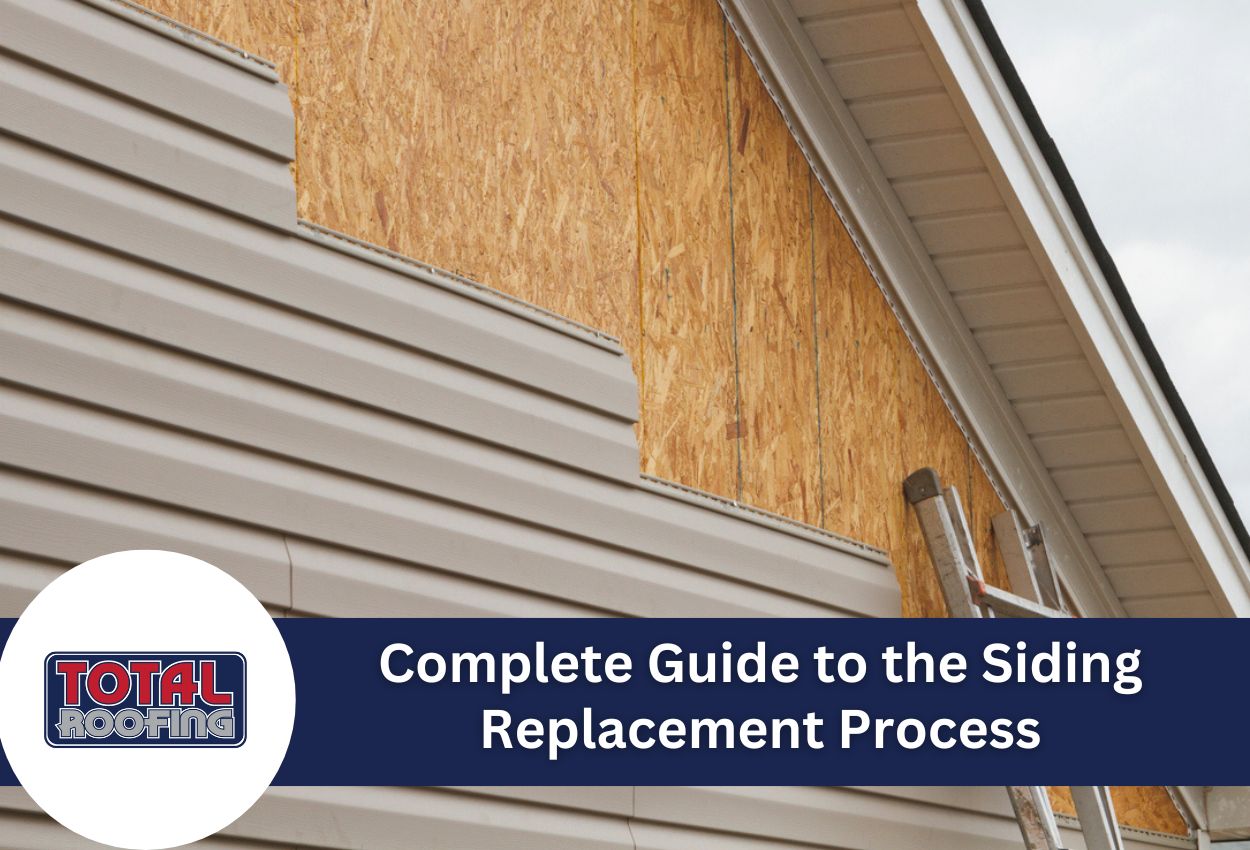
- Removal of existing siding inspection: Old siding comes off first. This inspection is the most important quality checkpoint in the entire project. Experienced contractors examine the wall sheathing for rot, moisture damage, and insulation gaps before enclosing the wall. Problems found here must be repaired before installation continues.
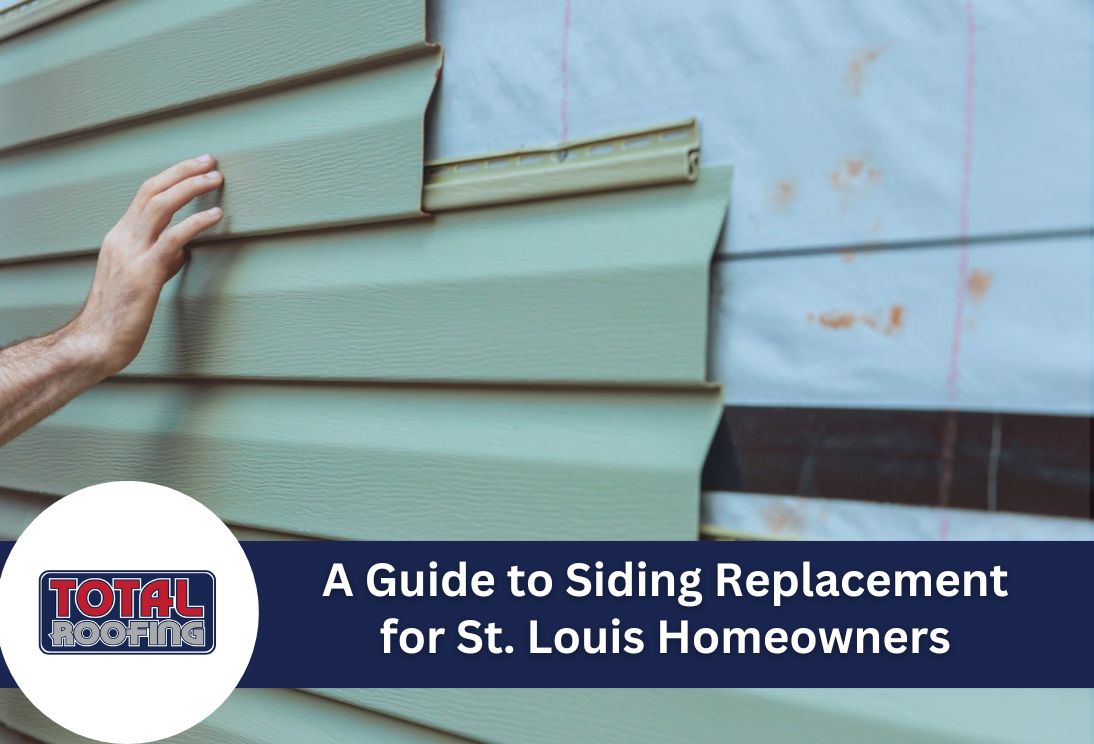
- Moisture barrier and flashing installation: A proper weather-resistant barrier and correctly installed flashing at windows, doors, and gaps are installed before any new siding goes up.
- New siding installation: Panels are cut and fastened according to the manufacturer’s specifications. Vinyl siding installation generally moves faster than fiber cement due to its lighter weight and simpler cutting requirements.
- Trim, caulking, and finishing work: Corners, J-channel, window surrounds, and all seams are caulked and trimmed. This step protects against leaks at every edge.
- Final inspection and permit close-out: A municipal inspector verifies the work meets local code. The permit is officially closed when the inspection passes.
- Homeowner walkthrough and warranty documentation: The contractor walks the homeowner through the finished project and hands over all warranty paperwork, both manufacturer product warranties and the contractor’s workmanship warranty.
Skipping or rushing that inspection in step six is the most common source of long-term siding failures. Any contractor unwilling to pause and address rot or moisture damage before closing the wall is putting the homeowner’s investment at serious risk.
Frequently Asked Questions About Siding Services in MO
These six questions address common concerns homeowners have before hiring a siding contractor, including licensing, insurance coverage, and project timing.
Q: Can I install siding over existing siding?
A: Yes, but it is not always recommended. Installing over old siding skips the inspection described earlier in this article, the step that catches rot and moisture damage before it gets sealed inside the wall. Most experienced contractors recommend a full tear-off so the wall sheathing can be inspected and addressed properly.
Q: Is fiber cement or vinyl better for Missouri weather?
A: Both perform well in Missouri, but fiber cement handles temperature changes and impact better, which is why it typically recoups close to 90% of costs at resale compared to roughly 80% for vinyl. Vinyl costs less upfront and installs faster. The right choice depends on budget, home style, and how long the homeowner plans to stay.
Q: How do I know if my contractor is licensed in Missouri?
A: Missouri requires siding contractors to hold a valid state registration. Ask for the contractor’s license number and verify it directly through the Missouri Secretary of State’s business registry. Any reputable contractor will provide this information without hesitation.
Q: Will my homeowners’ insurance cover siding damage from a storm?
A: Most homeowners’ insurance policies cover sudden storm damage, wind, hail, and falling debris. They typically do not cover damage caused by age or neglect. Contact your insurer directly to confirm your coverage terms before filing a claim. Homeowners who need help navigating storm-related claims can also review guidance on the insurance claim process for exterior damage.
Q: How long does a siding project take?
A: Active installation on a single-family home runs 3 to 7 days. The full process, including permits, which take 1 to 2 weeks to clear in most St. Louis municipalities, spans several weeks from first call to final inspection.
Q: Do I need to be home during installation?
A: Not for every day of work, but being present for the inspection is strongly recommended. That step covered in the installation process section earlier is where hidden rot and moisture damage get identified. A homeowner who is present during that inspection can make informed decisions before the wall gets closed up.
Ready to Get Started? Request a Quote for Siding Services in St. Louis, MO
Spring booking windows fill fast in St. Louis, and scheduling siding work early means avoiding the delays that push projects into summer heat or winter freezes. Total Roofing brings professional siding installation and repair to homeowners across the St. Louis area, covering vinyl siding replacement, fiber cement installation, and targeted siding repair.
Getting a quote now locks in your place in the schedule before the April to June installation window closes.
Request a free siding estimate.
Not ready to schedule? Learn more about siding installation and repair services.