



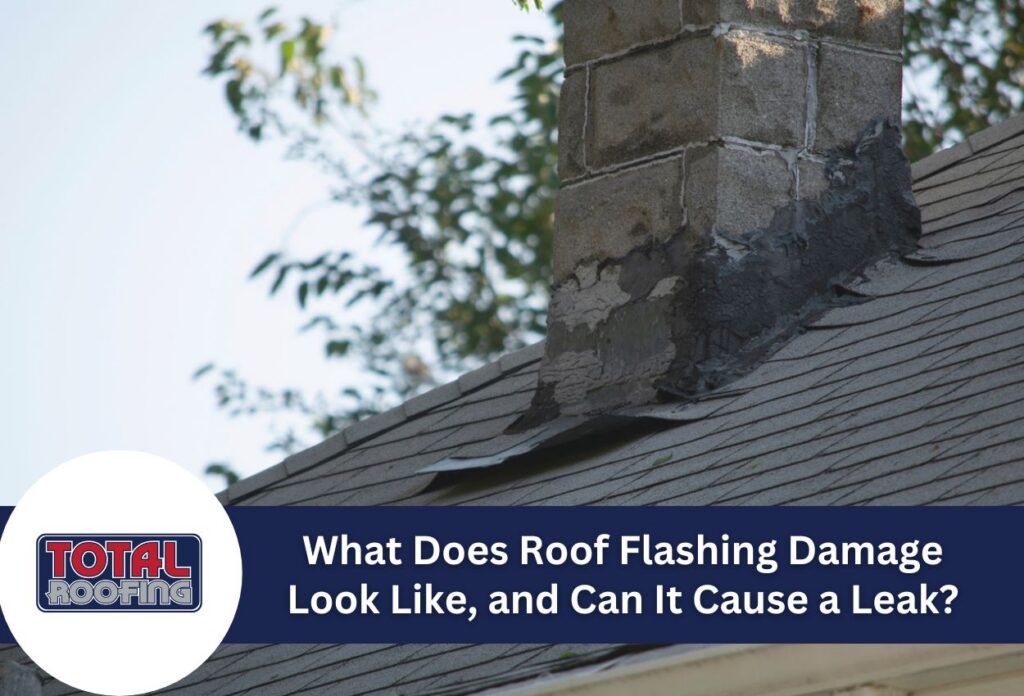
Chimney flashing separation is the number one cause of roof leaks in St. Louis, MO, and the city’s freeze-thaw winters, combined with 40 to 45 inches of annual precipitation, cause flashing to fail faster than in drier climates. Metal expands, contracts, pulls away from masonry, and water finds every gap.
The five most recognizable signs of damaged flashing are:
- Rust or corrosion on metal flashing
- Separation at the chimney or vent edges
- Cracked or broken flashing pieces
- Dried out or missing sealant
- Water stains on ceilings near chimneys or vents
Spotting these early can mean the difference between a quick repair and an expensive interior water damage job. This article walks through how to self-diagnose flashing damage, understand how fast it can get worse in St. Louis weather, and decide whether to call a roofer now or keep watching.
*Please note, price ranges listed in this article may not reflect the final cost of your project. Prices are subject to change based on various factors such as local labor rates, material quality, and more. All costs established in this article are rough estimates based on average industry rates.
What Are the Most Common Visual Signs of Damaged Roof Flashing?
Five specific visual signs point to damaged roof flashing, and each one looks different depending on how long the damage has been spreading. Catching even one of these early can prevent a small repair from turning into a full interior water damage job.
- Rust staining spreading from flashing edges: Orange or brown staining that extends 1 to 3 inches outward from the flashing edge signals oxidation. Once rust spreads that far, the metal underneath has already started to thin and weaken.
- Gaps or separation at chimney joints: Visible gaps of 1/8 inch or more between flashing and masonry mean water has a direct path inside. On St. Louis brick chimneys, this is one of the clearest signs of damaged roof flashing around chimney areas. Metal and brick expand and contract at different rates, and repeated freeze-thaw cycles between 20 degree fahrenheit winters and 90 degree summers can pull that gap open to 1/4 inch over time.
- Thermal cracks running perpendicular to the flashing seam: Short cracks that run across the flashing, not along it, result from repeated temperature swings. These cracks are often mistaken for surface wear but allow water to seep underneath.
- Dried or absent sealant beads: Sealant that has shrunk, cracked, or gone missing entirely along flashing edges leaves an open channel for water, especially during a heavy rainstorm.
- Lifted or buckled flashing corners: Corners that no longer lie flat against the surface of the roof have lost adhesion or fastener grip. Even a small lift allows wind-driven rain to work underneath.
Pipe boot gaskets, the rubber seals around plumbing vents, typically rot within 10 to 15 years on St. Louis roofs, creating a second high-risk flashing zone that homeowners often overlook entirely. If a chimney and pipe boots are both original to a roof that is 10 years or older, both areas need inspection at the same time.
How Can You Tell If Roof Flashing Is Leaking From Inside Your Home?
Yellow-brown ceiling stains appearing within 3 to 6 feet of a chimney or exterior wall are the most reliable interior sign of a flashing leak. In 70% to 80% of diagnosed cases, a stain that falls directly below a roof gap, chimney, vent, or valley points to flashing failure rather than a shingle problem. If the stain is mid-ceiling with no gap above it, suspect shingles. If it hugs a wall or chimney, suspect flashing first.
Beyond ceiling stains, look for drywall that feels soft or spongy when pressed, and peeling paint on interior walls near roof edges, both of which signal water that has been sitting longer than it looks. A musty smell in the attic without visible staining is also a warning sign. Flashing leaks often travel along rafters before they drip, so the wet spot on the ceiling may sit several feet away from where water actually entered.
| Interior Symptom | Most Probable Flashing Failure Point |
|---|---|
| Yellow-brown stain near the chimney | Step flashing or counter flashing separation |
| Musty attic smell near the ridge | Ridge flashing separation |
| Wet walls near exterior corners | Valley flashing failure |
| Damp ceiling near plumbing vent | Pipe boot gasket failure |
Mapping the interior symptom to a specific flashing zone narrows the repair scale before a roofer ever steps on the roof and can reduce diagnostic time on the day of inspection.
What Does Roof Flashing Rust and Deterioration Actually Look Like Up Close?
Copper flashing lasts 50 to 70 years in St. Louis’s climate, while galvanized steel, the most commonly installed material on older homes, typically fails within 15 to 20 years, making it the highest-risk option given the city’s 60% to 80% summer humidity levels.
| Flashing Material | Average Lifespan in St. Louis | First Signs of Deterioration | Rust Risk (60%–80% Humidity) |
|---|---|---|---|
| Galvanized Steel | 15 to 20 years | Light orange rust streaking along edges | High |
| Aluminum | 20 to 30 years | White oxidation or surface discoloration | Low to moderate |
| Copper | 50 to 70 years | Green patina forming at joints | Very low |
Roof flashing rust and deterioration signs progress through three stages. Stage 1 shows surface discoloration, white oxidation on aluminum, or faint orange streaking on galvanized steel. Stage 2 involves pitting or flaking with small holes under 1/4 inch forming in the metal surface. Stage 3 is structural perforation, meaning the flashing has holes large enough that patching no longer works. Full replacement is the only option at that point.
Homes in St. Louis with galvanized steel flashing installed before 2010 are more likely to already be in Stage 2 or Stage 3 deterioration, making a visual inspection a priority for any roof 15 years old or older. A residential roof inspection can confirm the stage in a single visit and determine whether repair or full replacement is the right call.
What Happens When Roof Flashing Fails, and You Don’t Repair It?
Ignoring failed roof flashing turns a $200 to $500 repair into a project that can cost $6,000 to $12,000, and the damage follows a predictable sequence that gets more expensive at every stage. Within 1 to 2 seasons, water entering through compromised flashing saturates the roof decking beneath the surface. That saturated roof decking isn’t visible from inside the home until it has already started to weaken.
St. Louis storms regularly dislodge flashing, and a single heavy rainstorm on a compromised seal can introduce enough water to cause visible ceiling staining within 24 to 48 hours. That fast damage timeline surprises most homeowners who assumed they’d have more warning. By the time a water stain appears on the ceiling, the damage above it has usually been building for weeks or months.
The cost gap between acting early and waiting is significant. A flashing repair in St. Louis typically runs $200 to $500. Replacing water-damaged roof decking and attic insulation, the next stage of damage averages $1,500 to $4,000. If the water reaches structural rafters, repair or replacement can reach $6,000 to $12,000. That’s 5 to 10 times the cost of fixing the flashing before water ever reached the wood. Within 2 to 4 seasons of unchecked water intrusion, mold growth in attic insulation becomes a separate remediation problem entirely, adding costs beyond the structural repairs.
Should You Repair Roof Flashing Yourself or Call a St. Louis Roofer?
DIY flashing repair makes sense in one narrow situation: dried sealant on a single flat joint with no rust, no separation, and safe ladder access, where materials run just $15 to $40. Everything beyond that threshold calls for a licensed St. Louis roofing contractor.
When DIY Is Reasonable
- Dried or cracked sealant on a single flat joint: If the flashing shows no rust, no separation, and the damaged area is limited to one accessible joint, applying fresh roofing sealant is a manageable repair for a homeowner comfortable on a ladder. Total material cost runs $15 to $40.
- No visible metal damage or movement: If the flashing lies flat, has no lifted edges, and passes a close visual check with zero rust or pitting, a sealant refresh is the only fix needed.
When to Call a Licensed Roofer
- Separation greater than 1/4 inch at chimney flashing: Gaps that wide at a chimney joint allow direct water entry and require professional re-bedding or full counter flashing replacement.
- Stage 2 or Stage 3 rust on galvanized flashing: Pitting, flaking, or visible holes in the metal mean the flashing cannot hold a sealant repair the material itself has failed.
- Interior ceiling stains already present: Water that has reached the ceiling has been traveling through the roof decking for weeks or months. A contractor needs to assess how far the damage has spread before any surface repair begins.
- Damage identified after a storm: Storm-related flashing displacement can affect multiple zones at once, and a single visible problem rarely tells the full story.
- Roof pitch steeper than 6:12: Working safely on a roof steeper than a 6:12 slope requires professional equipment and fall protection.
For St. Louis homes over 10 years old, bi-annual inspections, one in spring to catch freeze-thaw separation and one in fall before ice season, are recommended. A professional inspection typically costs $100 to $250. Catching a flashing problem at that stage keeps residential roof repair costs at $200 to $500 versus $1,500 or more if the damage is left to spread through another season.
Is Fixing Damaged Roof Flashing Worth the Cost Before It Becomes a Bigger Problem?
Yes, fixing flashing at the first sign of damage costs $200 to $500, while waiting until water stains appear can push total costs to $2,500, and ignoring failure entirely can reach $12,000 or more. The math is straightforward. Acting early prevents damage to the flashing itself. Waiting turns one small repair into a multi-trade project involving drywall, insulation, roof decking, and sometimes mold remediation.
| Repair Scenario | Typical Cost Range | The Scale of Damage |
|---|---|---|
| Repair at the first sign of damage | $200 to $500 | Flashing only, no secondary damage |
| Delayed repair after interior staining | $800 to $2,500 | Flashing plus drywall and insulation remediation |
| Ignored failure with structural rot | $6,000 to $12,000+ | Roof decking, rafters, and potential mold remediation |
Material choice also affects long-term costs. Copper flashing installed by many St. Louis roofing contractors lasts 50 to 70 years and runs $600 to $1,200 installed. Galvanized steel costs $200 to $500 per cycle but needs replacement every 15 to 20 years, meaning copper pays for itself after just two replacement cycles. Over 60 years, copper flashing can cost thousands less than repeatedly replacing galvanized steel.
Missouri homeowners’ insurance adds another reason to act fast. Most policies cover sudden water damage from storm-dislodged flashing, but typically exclude gradual deterioration. Documenting damage quickly and making repairs fast keeps a claim eligible. Waiting turns a covered storm into an excluded maintenance failure. Homeowners navigating this process can also explore roofing insurance claim assistance to help document and submit damage correctly.
Noticed Signs of Roof Flashing Damage in St. Louis? Here’s Your Next Step.
A professional roof flashing inspection, typically $100 to $250, is the lowest-cost move a St. Louis homeowner can make to avoid the $1,500 to $12,000 in structural repairs that follow unchecked water damage. Spring and post-storm timing are the most important windows to act, especially for homes over 10 years old.
Total Roofing serves St. Louis, MO, homeowners with flashing inspections and repairs handled by licensed roofers who know what freeze-thaw cycles and summer humidity do to metal over time.
Catching flashing damage early keeps repair costs at $200 to $500. Waiting can multiply that cost by 10 or more.
Schedule a roof inspection today.
Not ready to schedule? Learn more about storm damage roof repair.
Frequently Asked Questions
Got questions about your roof? We’ve got answers. From maintenance tips to insurance claims and repair timelines, our FAQ section covers the most common concerns homeowners have. Get informed and make confident decisions about protecting your home.
People Also Ask
Can roof flashing appear undamaged from the ground but still be failing?
Yes, step flashing tucked beneath shingle layers and counter flashing embedded in chimney mortar joints are largely invisible from street level. Separation, mortar erosion, and early-stage rust in these hidden zones only become visible during close-up inspection, making ground-level checks unreliable for brick chimney flashing common on St. Louis homes.
Does roof flashing damage look different after a St. Louis winter versus summer?
Seasonal timing changes what damage looks like. Post-winter inspections often reveal freshly widened separation gaps and frost-heaved flashing corners, while summer inspections expose dried sealant and thermal cracks that weren’t visible when temperatures were lower. Checking after both seasons gives the most complete picture of the flashing condition.
Are there roof locations where flashing damage is hardest to spot visually?
Valley flashing is the most commonly overlooked zone because it lies flat between two roof planes and stays partially hidden under overlapping shingles. Deterioration there often goes unnoticed until water stains appear on interior walls near exterior corners, a symptom that St. Louis homeowners frequently misattribute to window or siding issues instead.
Related Articles
-
 July 29, 2026Everything You Need to Know About Commercial Roofing Services in St. Louis, MOLooking for a trusted commercial roofing contractor in St. Louis? Compare roofing systems, costs, repairs, and replacements.
 -
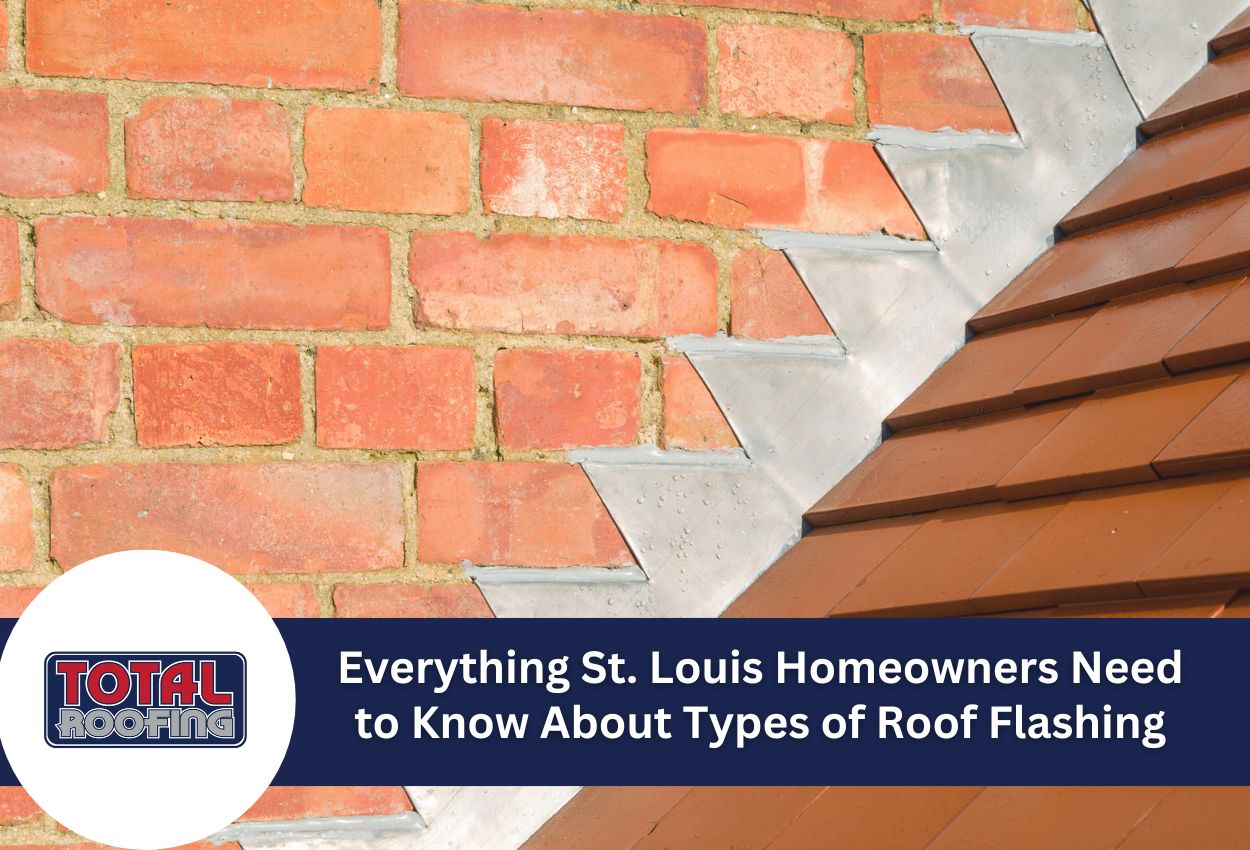 August 27, 2025Everything St. Louis Homeowners Need to Know About Types of Roof FlashingDiscover the different types of roof flashing, their uses, and how proper installation safeguards your home.
 -
 June 10, 2026Annual vs. Bi-Annual Commercial Roof Inspections: Which Is Right for Your Building?How often should your commercial roof be inspected? Compare annual and bi-annual plans.
Protect Your Home with Expert Roofing
Don’t wait for leaks or storm damage to cause costly repairs. Our experienced roofing team provides fast, reliable service, high-quality materials, and lasting results. Ensure your home stays safe, secure, and looking great—contact us today for a free estimate.