


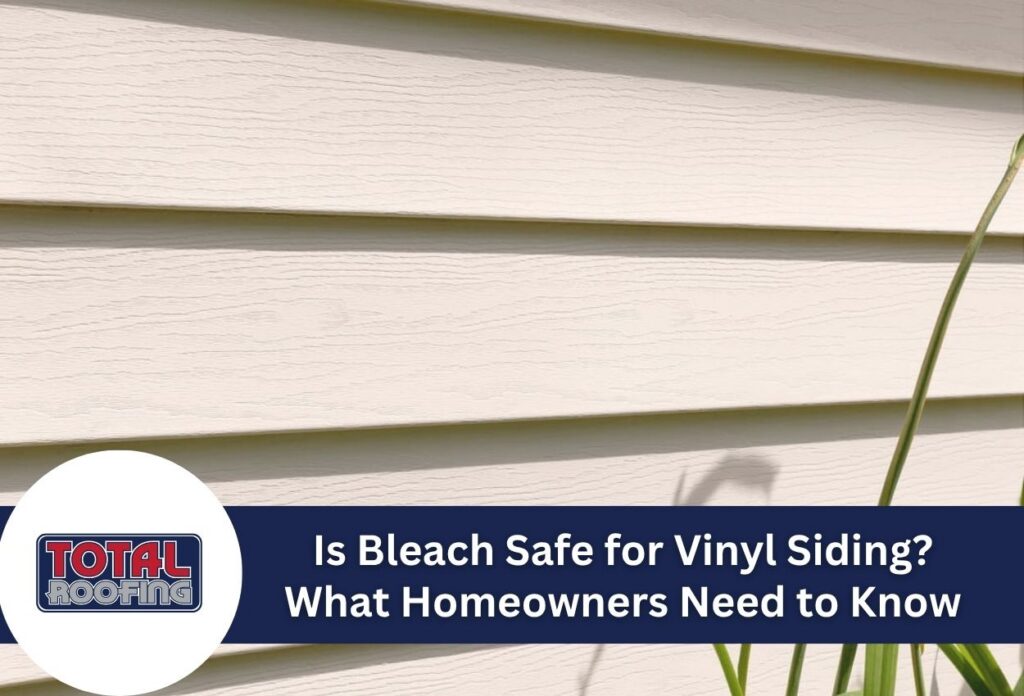

Diluted bleach is safe for vinyl siding when mixed at a ratio of 1 part bleach to 10 parts water (roughly 1.5 cups of bleach per gallon). Used at this ratio with proper rinsing, bleach removes mold, mildew, and algae without harming siding.
St. Louis homeowners run into this question more often than most. The average humidity sits at around 69% throughout the year, and the area sees 40 to 50 thunderstorm days annually. That combination creates ideal conditions for organic buildup, especially on north-facing walls or panels shaded by trees and neighboring homes on tightly spaced city lots.
Bleach becomes a problem under two specific conditions: using it at full or near-full concentration, or skipping the rinse step after application. Both mistakes can dull the siding surface, leave streaky residue, or damage nearby plants and trim.
What Is the Right Bleach-to-Water Ratio for Cleaning Vinyl Siding?
The right dilution depends on how heavy the buildup is: Light stains need as little as 1 part bleach to 20 parts water, while heavy mold or algae growth calls for a stronger 1 part bleach to 6 parts water mix. Standard household bleach contains 6% to 8.25% sodium hypochlorite and must always be diluted before use. Undiluted bleach can damage or discolor siding, so test any mix on a hidden spot first.
| Cleaning Level | Bleach-to-Water Ratio | Best Use Case | Contact Time | Rinse Required? |
|---|---|---|---|---|
| Light Cleaning | 1 part bleach to 20 parts water | Minor surface staining | 5 to 10 minutes | Yes |
| Standard Cleaning | 1 part bleach to 10 parts water | General mildew and dirt buildup | 5 to 10 minutes | Yes |
| Heavy Mold/Algae Treatment | 1 part bleach to 6 parts water | Heavy mold, algae, or mildew-stained walls | 5 to 10 minutes | Yes |
Apply the solution with a soft brush or pump sprayer, working from the bottom up and keeping the siding wet. Let it sit for about 5 to 10 minutes, but never let it dry on the panels; then rinse thoroughly from top to bottom. Wet down nearby plants beforehand and cover them, and tape off any unsealed wood trim. Use a plastic bucket, and never mix bleach with ammonia or vinegar. Matching the ratio to the level of buildup gets the job done without repeat treatments.
Will Bleach Damage or Fade Vinyl Siding Colors Long-Term?
A properly mixed bleach solution (yielding a 0.5% to 1% sodium hypochlorite concentration) does not chemically strip UV-stabilized pigment from vinyl siding. The risk of color fading increases drastically if you apply standard household bleach at full strength or with repeated overly concentrated applications over a 2-to-3-year period. That distinction matters because most vinyl siding is engineered specifically to resist moderate chemical exposure at cleaning-level dilutions.
Most major vinyl siding manufacturers offer limited lifetime warranties that include fade protection, though terms, proration, and transferability vary. Some manufacturers list diluted bleach in their approved cleaning instructions, while others restrict cleaning products or require specific methods. Warranties can be voided by improper installation, failure to maintain the siding, unapproved harsh cleaners, and, in some cases, high-pressure washing. Check your manufacturer’s care and cleaning instructions before using bleach, and rinse the solution off before it dries.
The St. Louis Summer Sun Risk
St. Louis summers add challenges that homeowners in cooler climates do not face. When outdoor temperatures exceed 85 degrees Fahrenheit, which happens regularly from June through August, bleach solutions can evaporate faster than expected on sun-exposed panels. That rapid evaporation leaves behind a concentrated residue on the surface, raising the chance of streaking and an uneven appearance even when the original mix was properly diluted.
The fix is straightforward: Clean vinyl siding in the morning or on overcast days to slow evaporation and keep the solution working evenly across the panel. Staying within the 5 to 10-minute rinse window becomes especially important on warm, sunny afternoons when any delay allows residue to set.
Can You Leave Bleach on Vinyl Siding Without Rinsing?
No. Always rinse bleach off before it dries. A bleach solution that dries on the panels can leave streaks and residue, and runoff can harm the surfaces around your siding. Protect these areas before you start:
- Brick and stone accents: Cover them or wet them down first so runoff doesn’t stain them.
- Painted or unsealed wood trim: Tape off unsealed wood and keep bleach off painted surfaces, where it can dull or strip the finish.
- Aluminum soffit and fascia boards: Chlorine bleach can corrode bare aluminum, so rinse these surfaces quickly if they get splashed.
- Plants and lawn: Wet down nearby plants beforehand and cover them, since chlorine bleach can burn foliage and harm grass.
- Outdoor HVAC units: Cover them or keep bleach away from the unit.
To rinse, use a garden hose and work from the top down as soon as the contact time is up (5 to 10 minutes). Keep the stream pointed down so water isn’t forced behind the panels. A garden hose has plenty of force to clear bleach residue. If you use a pressure washer, check your siding manufacturer’s instructions first, since some limit pressure and approved cleaners.
What Are the Best Alternatives to Bleach for Cleaning Vinyl Siding?
Oxygen bleach is the strongest color-safe bleach alternative. It kills mold at a rate comparable to diluted chlorine bleach while posing less risk to surrounding brick, mortar, and trim surfaces. The four most common cleaning methods each bring different cost, safety, and performance tradeoffs worth comparing before picking one.
| Cleaning Method | Mold Kill Rate | Typical Cost per 1,500 Sq. Ft. | Rinse Required? | Color Safe? |
|---|---|---|---|---|
| Diluted Bleach Solution (0.5% to 1% concentration) | 99%+ | $10 to $30 | Yes | Conditional |
| Oxygen Bleach | 90% to 95% | $15 to $25 | Yes | Yes |
| Commercial Vinyl Cleaner | 85% to 95% | $25 to $45 | Depends on product | Yes |
| White Vinegar Solution | 80% | Under $3 | Yes | Yes |
White vinegar costs the least, but its mold-killing rate of roughly 80% falls short of chlorine bleach at 99% or more, making it a poor choice for heavy mold buildup. For St. Louis homes where vinyl-sided additions are often attached to original brick buildings, oxygen bleach is the recommended alternative because it does not weaken mortar joints or damage masonry the way chlorine bleach runoff can. Most standard commercial exterior detergents require thorough rinsing to prevent chemical streaking. Only specific slow-acting biological formulas are truly no-rinse.
Does Cleaning Vinyl Siding With Bleach Save Money Compared to Hiring a Pro or Replacing Panels?
DIY bleach cleaning costs $10 to $30 in materials for a 1,500 to 2,000-square-foot home, compared to $250 to $500 for professional soft-wash exterior cleaning at the same size, making it the lowest-cost option. That gap widens even further when panels need to be replaced. A partial vinyl siding panel replacement in St. Louis averages $300 to $800 per wall section, and a full replacement on a mid-size home runs $7,000 to $14,000.
| Option | Typical Cost (1,500 to 2,000 Sq. Ft. Home) | Siding Lifespan Impact | Best For |
|---|---|---|---|
| DIY Bleach Cleaning | $10 to $30 in materials | Maintains 30 to 40-year lifespan when done correctly | Homeowners with light to moderate buildup |
| Professional Soft-Wash Cleaning | $250 to $500 | Same lifespan benefit with lower risk of application error | Heavy buildup, multi-story homes, mixed exterior materials |
| Partial Panel Replacement | $300 to $800 per wall section | Restores damaged sections only | Panels already degraded beyond cleaning |
| Full Siding Replacement | $7,000 to $14,000 | Resets full lifespan to 30 to 40 years | Widespread failure or end-of-life siding |
Properly maintained vinyl siding lasts 30 to 40 years. While mold and algae feed on the dirt resting on the siding rather than the inorganic vinyl itself, leaving them untreated can cause permanent cosmetic staining to the panel’s clear coat. Heavy, neglected growth can also trap moisture against the home’s underlayment, making regular cleaning essential for protecting your home’s exterior appearance.
The best time to schedule in St. Louis is October through November, after peak humidity ends but before freezing temperatures arrive. That timeframe minimizes the rapid-dry risk that comes with summer heat and the freeze-crack risk of applying moisture to panels in winter. Annual or biannual cleaning on that fall schedule keeps costs in the $10 to $30 range and protects vinyl siding that would otherwise cost thousands to replace early.
Ready to Clean Your Siding the Right Way? Here’s How to Get Started in St. Louis
Skipping proper rinse procedures or using the wrong dilution ratio can permanently stain or warp your siding, pushing homeowners toward expensive full replacement costs that regular cleaning could have prevented. If your home has multi-story walls, a mixed brick-and-vinyl exterior, or heavy mold coverage, a professional soft-wash removes the dilution, overspray, and rinse timing risks entirely.
Total Roofing works with St. Louis homeowners on exterior cleaning and siding services, with the right equipment and methods for the region’s older mixed-material homes. Contact the team today for an exterior cleaning estimate, and let our St. Louis team handle the ratios, rinsing, and cleanup for you.
Not ready to schedule? Learn more about our exterior soft-wash cleaning services.